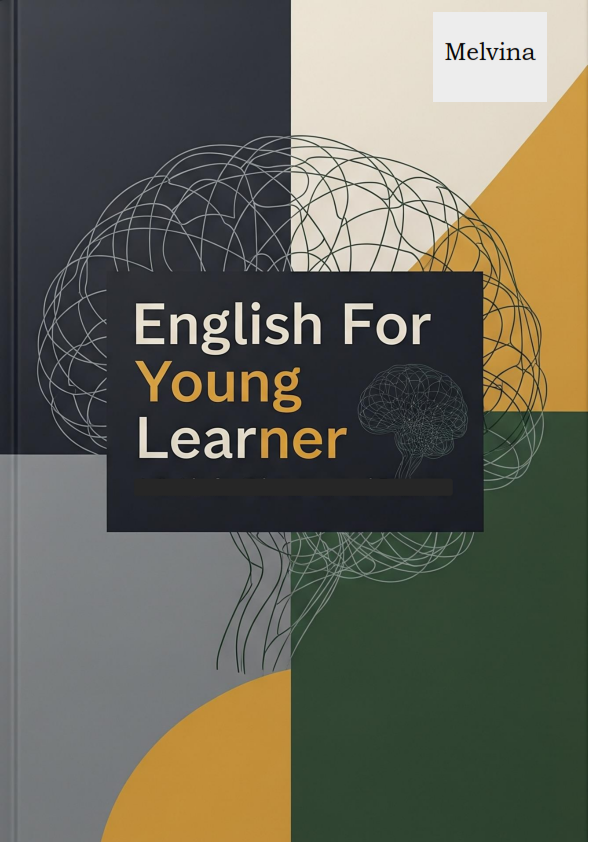
English For Young Learner
Oleh Melvina
Rp 50.000
Rp 15.000
Tertarik Membaca Buku Ini?
Buku akan dikirim instan (jika e-book) atau via Ekspedisi (Cetak).
Spesifikasi Buku
- Abe, Keiko. 1991. Teaching English to Children in an EFL Setting (The English Teaching Forum). Yokohama, Japan: Kanto Gakuin Women’s College.
- Brewster, J., Ellis, G., & Girard, D. (2002). The Primary English Teacher’s Guide. Penguin English.
- Brown, H.D. 1987. Principles of Language Learning and Teaching (2nd Ed). New Jersey, Prentice Hall.
- Cameron, Lynne. 2003. Teaching English to Young Learners. Cambridge University Press.
- Clark, Herbert H. and Clark, Eve V. 1977. Psychology and Language. New York: Harcourt Brace Jovanovich. INC.
- Collie, R.J., & Martin, A.J. (2016). Adaptability: An important capacity for effective teachers.Educational Practice and Theory, 38, 27-39. DOI: 10.7459/ept/38.1.03
- Hudelson, Sarah. 1991. EFL Teaching and Children: A Topic-Based Approach (The English Teaching Forum). Arizona State University, USA.
- Hasnanto, A. T. (2024). Effective Classroom Management to Create a Positive Learning Environment. Journal Corner of Education, Linguistics, and Literature, 4(001), 257-268.
- Harmer, J. 2007. How to Teach English. England: Pearson Limited Education.
- Krashen, Stephen D. and Terrell, Tracy D. 1983. The Natural Approach. New Jersey: Alemany Press Regent/Prentice Hall.
- Luo, X. (2025). The Application of Humor in English Vocabulary Teaching. Literature, Language and Cultural Studies, 1(3), 136-141.
- Mamadaliyeva, Z., & Abduvoxobov, F. (2024). Strategies And Methods For Teaching English To Young Children. Journal Of Education, Ethics And Value, 3(11), 19-23.
- Maxmudjonova, R. (2024, May). Effective Classroom Management Strategies: Creating A Positive Learning Environment. In Conference Proceedings: Fostering Your Research Spirit (pp. 140-141).
- Meriç, E. (2023). Patience as a predictor of teachers’ classroom management skills. International Online Journal of Education and Teaching (IOJET), 10(2), 959-982.
- Nugroho, H. R. A., Nafiah, K., Hutagaol, R. T. S., & Sirait, C. C. (2025). Implementing Proactive Classroom Management in an Effective Classroom Management Approach for Students in Schools. Jurnal Inovasi Pembelajaran Karakter, 10(1).
- Nuralisa, N., & Nirwanto, R. (2023). Role Of Teaching Materials On English For Young Learners. PUSTAKA: Jurnal Bahasa dan Pendidikan, 3(4), 01-12.
- Odiljonova, S. (2024). Effective Classroom Management Strategies: Tips For Maintaining A Positive Learning Environment For Language Learners. O ‘zbekiston davlat jahon tillari universiteti konferensiyalari, 682-685.
- Piccolo, Louanne. 2010. TEYL – Teaching Young Children English. Journal Suite 101, April 10th 2019
- Pinter, A. (2006). Teaching Young Language Learners. Oxford University Press.
- Pratama. M. T. P., & Gandana, I. (2024). The Use Of Silent Way Through Digital Flashcards: Benefits And Challenges. Eltin Journal: Journal of English Language Teaching in Indonesia, 12(1), 34-43.
- Scott, Wendy A. and Ytreberg, Lisbeth H. 1993. Teaching English to Children. Longman
- Scott, W. A., & Ytreberg, L. H. (1983). Teaching English to Children. Longman.
- Tomlinson, B. (2012). Materials development for language learning and teaching. Language teaching, 45(2), 143-179.,
- Yulmiati, Y., & Melvina, M. (2022). An Analysis Of Humor In Classroom Interaction. Social Sciences Review and Humanities, 1(2), 121-129.
- Bennett, S. & Maton, K. (2010). Beyond the 'digital natives' debate: Towards a more nuanced understanding of students' technology experiences. Journal of Computer Assisted Learning. 26(5), 321-331. https://doi.org/10.1111/j.1365-2729.2010.00360.x
- Education Week. (2022). What Is Culturally Responsive Teaching? URL: https://www.edweek.org/teaching-learning/culturally-responsive-teaching-culturally-responsive-pedagogy/2022/04. Access at 11 June 2025.
- Gonzalez, N. (2020). Culturally Responsive Teaching: Theory, Research, and Practice. New York: Teachers College Press.
- Hwang, G.J. & Chang, H.F. (2019). A review of mobile technology in education: A focus on the impact of mobile learning on students' learning outcomes. Educational Technology & Society. 22(1), 1-12.
- Hollie, S. (2017). Culturally and Linguistically Responsive Teaching and Learning: Affirming Young Learners. (2nd ed.). New York: Routledge.
- OECD. (2023). Digital equity and inclusion in education. URL: https://one.oecd.org/document/EDU/WKP(2023)14/en/pdf. Access at 11 June 2025.
- Radesky, J. S., Schermerhorn, A. C., & Eisenberg, M. H. (2016). Mobile and interactive media use by young children: The good, the bad, and the unknown. Pediatrics. 138(5), e20162591. https://doi.org/10.1542/peds.2016-2591
- Smith, J. (2023). The Impact of Technology on English Learning for Young Learners. Journal of Language Education. 15(2), 45-60. https://doi.org/10.1234/jle.2023.0152
- Vygotsky, L. S. (1978). Mind in Society: The Development of Higher Psychological Processes. Cambridge, MA: Harvard University Press.
Solusi Akademik Komprehensif
Karya Anda tidak hanya terbit menjadi buku, tetapi juga terdistribusi luas dalam ekosistem digital untuk memberikan dampak akademis maksimal.
Institutional Repository
Kami memiliki repository tersendiri (repository.haqipub.com). Seluruh karya yang Anda terbitkan akan diunggah ke repository ini, sehingga karya tulisan Anda otomatis terindeks di Google Scholar dan direktori akademis lainnya.
Penerbitan Jurnal Ilmiah
Selain publikasi buku, kami juga menyediakan layanan penerbitan jurnal ilmiah. Platform OJS (Open Journal Systems) kami di journal.haqipub.com siap menjadi wadah publikasi hasil riset Anda.
Buku Sejenis
STUDENT’S BOOK Basic Reading Authentic B...
Rp 15.000