
Membangun Pembelajaran Bermakna MODEL SHARINGPLUS Dalam Psikologi Pendidikan Dan Pengajaran Bahasa
Rp 60.000
Rp 15.000
Tertarik Membaca Buku Ini?
Buku akan dikirim instan (jika e-book) atau via Ekspedisi (Cetak).
Spesifikasi Buku
- Al-Ghazali. (2002). Ihya’ ‘ulum al-din (Vols. 1–4). Beirut; Dar al-Kutub al-‘Ilmiyyah.
- Al-Attas, S. M. N. (1991). The concept of education in Islam: A framework for an Islamic philosophy of education. Kuala Lumpur: International Institute of Islamic Thought and Civilization (ISTAC).
- Al-Hoorie, A. H. (2018). The L2 motivational self system: A meta-analysis. Studies in Second Language Learning and Teaching, 8(4), 721–754. https://doi.org/10.14746/ssllt.2018.8.4.2
- Andrade, H. L. (2019). A critical review of research on student self-assessment. Frontiers in Education, 4, Article 87. https://doi.org/10.3389/feduc.2019.00087
- Aspelin, J., & Jonsson, A. (2019). Relational competence in teacher education. Teaching and Teacher Education, 86, 102875. https://doi.org/10.1016/j.tate.2019.102875
- Asterhan, C. S. C., Howe, C., & Littleton, K. (2020). Dialogic teaching and classroom talk: A social‐psychological perspective. Educational Psychology Review, 32(3), 673–695. https://doi.org/10.1007/s10648-020-09560-7
- Ausubel, D. P. (1968). Educational psychology: A cognitive view. Holt, Rinehart & Winston.
- Bandura, A. (1977). Social learning theory. NJ: Prentice Hall.
- Bandura, A. (1986). Social foundations of thought and action: A social cognitive theory. NJ: Prentice Hall.
- Bandura, A. (1991). Social cognitive theory of self-regulation. Organizational Behavior and Human Decision Processes, 50(2), 248–287. https://doi.org/10.1016/0749-5978(91)90022L
- Bandura, A. (1997). Self-efficacy: The exercise of control. New York: W. H. Freeman.
- Bandura, A. (2001). Social cognitive theory: An agentic perspective. Annual Review of Psychology, 52, 1–26. https://doi.org/10.1146/annurev.psych.52.1.1
- Cornelius-White, J. H. D. (2019). Learner-centered instruction: Building relationships for student success. SAGE Open, 9(4), 1–13. https://doi.org/10.1177/2158244019885138
- Cornelius-White, J. H. D., Laing, J., & Derks, M. (2016). Teacher–student relationships in learner-centered classrooms. International Journal of Learner-Centered Education, 1(1), 1–21.
- Daniels, H. (2016). Vygotsky and Pedagogy. Routledge.
- Derakhshan, A., Kruk, M., Mehdizadeh, M., & Pawlak, M. (2022). Activity theory and teacher interpersonal behavior. System, 106, 102751. https://doi.org/10.1016/j.system.2022.102751
- Donato, R. (1994). Collective scaffolding in second language learning. In J. P. Lantolf & G. Appel (Eds.), Vygotskian approaches to second language research (pp. 33–56). Norwood, NJ: Ablex.
- Dörnyei, Z., & Ryan, S. (2015). The psychology of the language learner revisited. Routledge. https://doi.org/10.4324/9781315779553.
- Dweck, C. S. (2006). Mindset: The new psychology of success. Random House.
- Farrell, T. S. C. (2018). Reflective practice for language teachers. TESOL Journal, 9(3), 457–472. https://doi.org/10.1002/tesj.388
- Frazier, M. L., Fainshmidt, S., Klinger, R. L., Pezeshkan, A., & Vracheva, V. (2017). Psychological safety: A meta‐analytic review. Personnel Psychology, 70(1), 113–165. https://doi.org/10.1111/peps.12183
- Gagné, R. M. (1965). Conditions of Learning. Holt, Rinehart and Winston.
- Hagenauer, G., & Volet, S. E. (2014). Teacher–student relationship at university. Higher Education, 68(1), 1–21. https://doi.org/10.1007/s10734-013-9674-4
- Hashim, R. (2018). Reclaiming the Islamic intellectual tradition in education. Kuala Lumpur: International Institute of Islamic Thought and Civilization (ISTAC).
- Hidi, S., & Renninger, K. A. (2019). Interest development and its relation to motivation.
- Dalam K. A. Renninger & S. Hidi (Eds.), The Cambridge handbook of motivation and learning (pp. 265–290).
- Hiver, P. (2017). Learner psychology and language learning. Language Teaching, 50(4), 539–552.
- Hyland, K. (2019). Second language writing (2nd ed.). Cambridge: Cambridge University Press.
- Illeris, K. (2018). Contemporary theories of learning: Learning theorists… in their own words (2nd ed.). London: Routledge.
- Jennings, P. A., & Greenberg, M. T. (2009). The prosocial classroom: Teacher social and emotional competence in relation to student and classroom outcomes. Review of Educational ResearchVolume 79, Issue 1 . doi.org/ 10.3102/0034654308325693
- John-Steiner, V., & Mahn, H. (1996). Sociocultural approaches to learning and development. Educational Psychologist, 31 (3–4), 191–206. https: //doi.org/10.1080/00461520.1996.9653266
- Kaplan, A., & Maehr, M. L. (2007). The contributions and prospects of goal orientation theory. Educational Psychology Review, 19(2), 141–184.
- Kementerian Agama Republik Indonesia. (2019). Al-Qur’an dan terjemahannya. Jakarta: Lajnah Pentashihan Mushaf Al-Qur’an.
- Kubanyiova, M., & Crookes, G. (2016). Re-envisioning the roles, tasks, and contributions of language teachers. The Modern Language Journal, 100(S1), 117–132. https://doi.org/10.1111/modl.12304
- Lantolf, J. P., & Appel, G. (Eds.). (1994). Vygotskian approaches to second language research. Ablex Publishing.
- MacIntyre, P. D., Gregersen, T., & Mercer, S. (2019). Setting an agenda for positive psychology in SLA. The Modern Language Journal, 103(1), 262–274. https://doi.org/10.1111/modl.12544
- Maslow, A. H. (1954). Motivation and personality. New York, NY: Harper & Row.
- Mercer, N., & Howe, C. (2012). Explaining the dialogic processes of teaching and learning. Learning, Culture and Social Interaction, 1(1), 12–21. https://doi.org/10.1016/j.lcsi.2012.03.001
- OECD. (2019). PISA 2018 results (Volume III): What school life means for students’ lives. Paris: OECD Publishing.doi.org/10.1787/acd78851
- Oga-Baldwin, W. L. Q., Fryer, L. K., & Larson-Hall, J. (2019). The role of autonomy-supportive teaching. System, 82, 102–116. https://doi.org/10.1016/j.system.2019.02.003
- Oga-Baldwin, W. L. Q., Nakata, Y., Parker, P., & Ryan, R. M. (2023). Motivation and engagement in language learning. System, 114, 103037. https://doi.org/10.1016/j.system.2023.103037
- Ohta, A. S. (2021). Sociocultural theory and the teaching of second languages. London: Routledge.
- Paivio, A., & Clark, J. M. (1991). Dual coding theory and education. Educational Psychology Review, 3 (3), 149–210. https://doi.org/10.1007/BF01320076.
- Panadero, E. (2017). A review of self-regulated learning. Educational Psychology Review, 29(4), 845–873. https://doi.org/10.1007/s10648-017-9400-7
- Paris, D., & Alim, H. S. (2017). Culturally sustaining pedagogies. New York: Teachers College Press.
- Rogers, C. R. (1959). A theory of therapy, personality, and interpersonal relationships. In S. Koch (Ed.), Psychology: A study of a science (Vol. 3, pp. 184–256). McGraw-Hill.
- Rogers, C. R. (1961). On becoming a person. Boston, MA: Houghton Mifflin.
- Rogers, C. R. (1980). A way of being. Boston, MA: Houghton Mifflin..
- Roorda, D. L., Koomen, H. M. Y., Spilt, J. L., & Oort, F. J. (2011). The influence of affective teacher–student relationships on students’ school engagement and achievement: A meta-analytic approach. Review of Educational Research, 81 (4), 493–529. https://doi.org/10.3102/0034654311421793
- Ryan, R. M., & Deci, E. L. (2020). Intrinsic and extrinsic motivation (2nd ed.). New York: Guilford Press.
- Ryan, M., & Ryan, M. (2015). Developing a systematic reflective practice. Teaching and Teacher Education, 47, 1–11. https://doi.org/10.1016/j.tate.2014.12.004
- Sato, M., & Ballinger, S. (2020). Peer interaction and second language learning. Amsterdam: John Benjamins. https://doi.org/10.1075/lllt.52
- Schunk, D. H., & DiBenedetto, M. K. (2020). Motivation and social cognitive theory. Contemporary Educational Psychology, 60, 101832. https://doi.org/10.1016/j.cedpsych.2019.101832
- Schunk, D. H., & Pajares, F. (2005). Competence beliefs and academic functioning. Educational Psychology Review, 17(2), 85–114. https://doi.org/10.1007/s10648-005-3958-7
- Swain, M. (2000). The output hypothesis and beyond: Mediating acquisition through collaborative dialogue. In J. P. Lantolf (Ed.), Sociocultural theory and second language learning (pp. 97–114). Oxford University Press.
- Teimouri, Y., Goetze, J., & Plonsky, L. (2019). Second language anxiety and achievement. Studies in Second Language Acquisition, 41(2), 363–388. https://doi.org/10.1017/S0272263118000311
- Teng, L. S., & Zhang, L. J. (2020). Empowering learners in EFL writing. TESOL Quarterly, 54(1), 178–209. https://doi.org/10.1002/tesq.531
- Usher, E. L., & Schunk, D. H. (2018). Social cognitive theoretical perspective of self-regulation. Dalam D. H. Schunk & J. A. Greene (Eds.), Handbook of self-regulation of learning and performance (2nd ed., pp. 19–38). New York, NY: Routledge.
- Vygotsky, L. S. (1978). Mind in Society: The Development of Higher Psychological Processes. Harvard University Press.
- Wang, Y., & Guan, H. (2023). Classroom climate and student engagement. System, 115, 103042. https://doi.org/10.1016/j.system.2023.103042
- Weimer, M. (2013). Learner-centered teaching (2nd ed.). Jossey-Bass.
- Wentzel, K. R. (2019). Motivation in education: Theory, research, and applications (5th ed.). New York, NY: Routledge.A theory of human motivation. Psychological Review, 50(4), 370–396. https://doi.org/10.1037/h0054346
- Wertsch, J. V., & Stone, C. A. (1985). The concept of internalization in Vygotsky’s account of the genesis of higher mental functions. In J. V. Wertsch (Ed.), Culture, Communication, and Cognition: Vygotskian Perspectives (pp. 162–179). Cambridge University Press.
- Wood, D., Bruner, J. S., & Ross, G. (1976). The role of tutoring in problem solving. Journal of Child Psychology and Psychiatry, 17 (2), 89–100. https://doi.org/10.1111/j.1469-7610.1976.tb00381.x
- Yasuda, S. (2022). Genre-based pedagogy and EFL writing. Journal of Second Language Writing, 56, 100876. https://doi.org/10.1016/j.jslw.2022.100876
- Zepke, N. (2021). Student engagement, neo-liberalism, and higher education. Higher ducation Research & Development, 40(5), 869–882. 10.1080/07294360.2020.1801668
- Zimmerman, B. J. (2000). Attaining self-regulation. In M. Boekaerts et al. (Eds.), Handbook of self-regulation (pp. 13–39). San Diego, CA: Academic Press.
- Zohar, D., & Marshall, I. (2001). Spiritual intelligence: The ultimate intelligence. Bloomsbury Publishing.
Solusi Akademik Komprehensif
Karya Anda tidak hanya terbit menjadi buku, tetapi juga terdistribusi luas dalam ekosistem digital untuk memberikan dampak akademis maksimal.
Institutional Repository
Kami memiliki repository tersendiri (repository.haqipub.com). Seluruh karya yang Anda terbitkan akan diunggah ke repository ini, sehingga karya tulisan Anda otomatis terindeks di Google Scholar dan direktori akademis lainnya.
Penerbitan Jurnal Ilmiah
Selain publikasi buku, kami juga menyediakan layanan penerbitan jurnal ilmiah. Platform OJS (Open Journal Systems) kami di journal.haqipub.com siap menjadi wadah publikasi hasil riset Anda.
Buku Sejenis
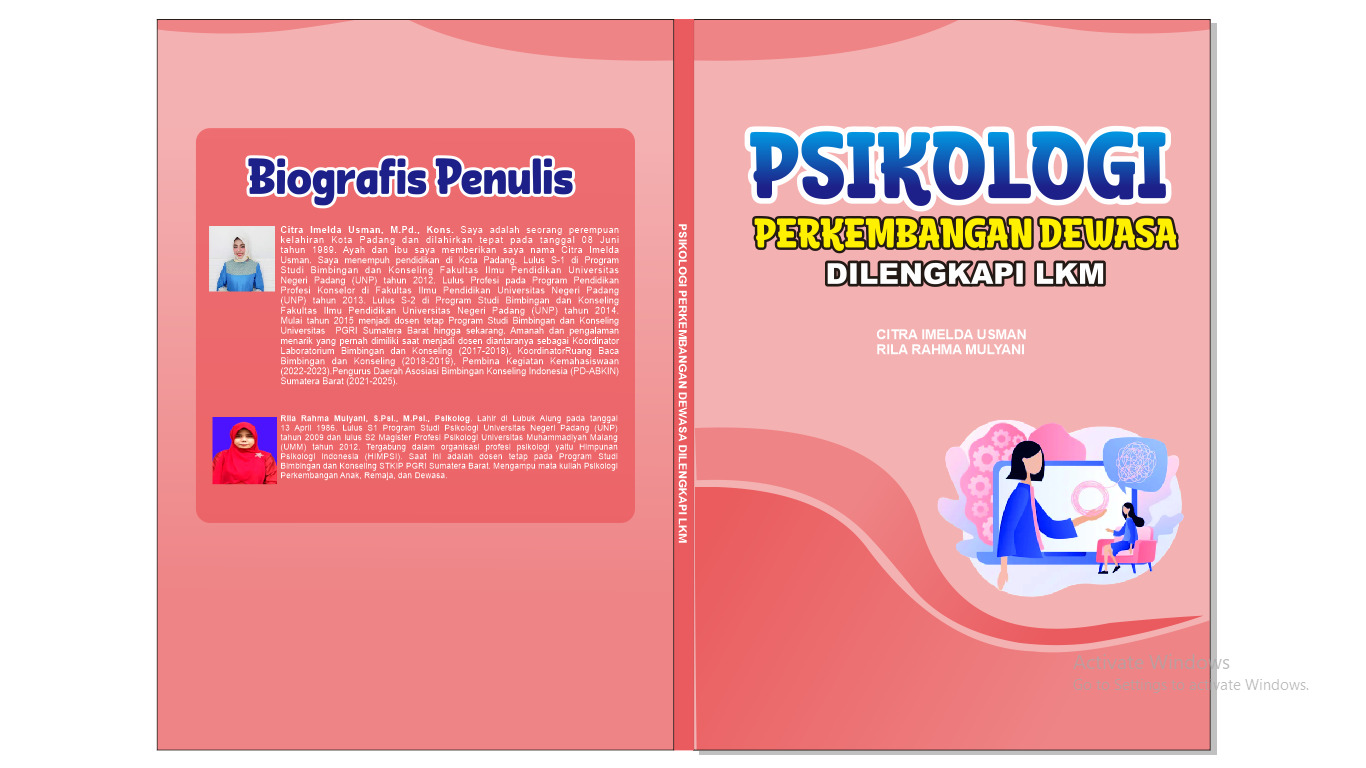
Psikologi Perkembangan Dewasa Dilengkapi...
Rp 15.000
Pendidikan Anak Berkebutuhan Khusus
Rp 25.000
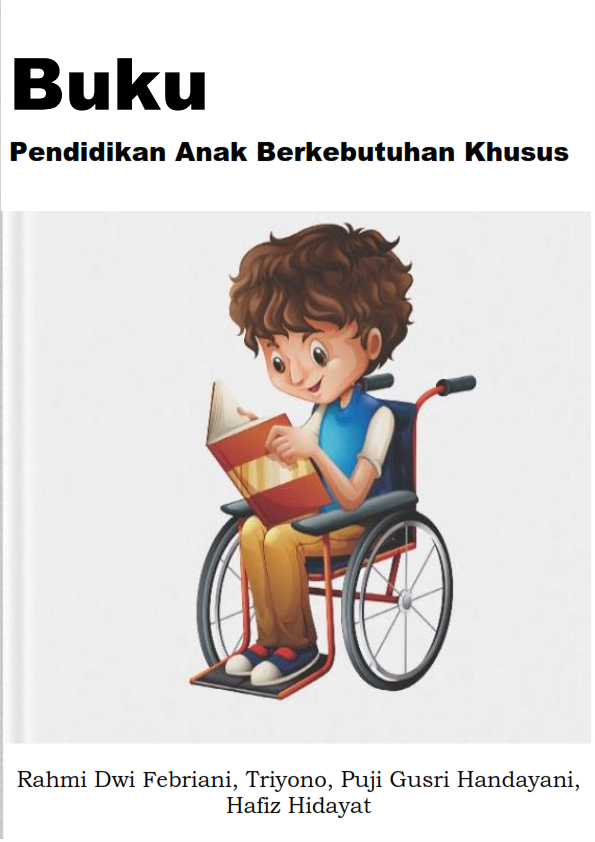
Buku Pendidikan Anak Berkebutuhan Khusus
Rp 15.000
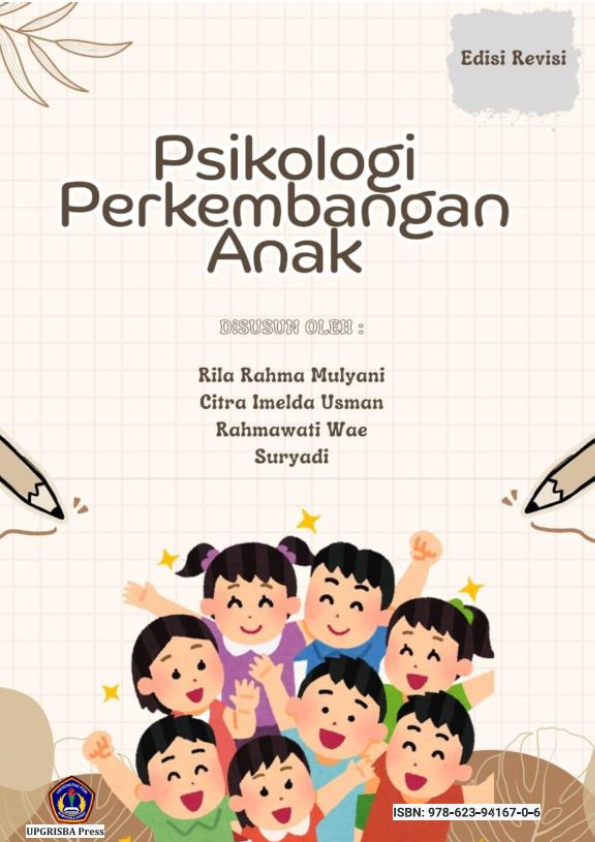
Psikologi perkembangan anak
Rp 25.000